
“The New Power Map: How the 27th Amendment Reshapes Pakistan"
An Article examining the changes and impact made by the 27th Amendment to the Constitution of Pakistan.
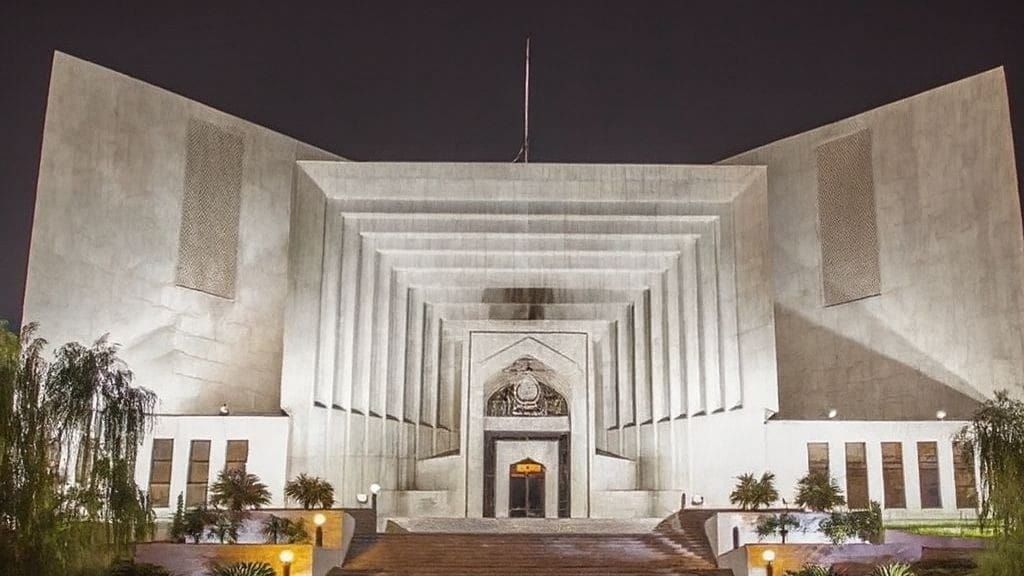
In the quiet corridors of Islamabad, where political storms usually gather with loud thunder, the most significant change to Pakistan’s power structure in fifty years arrived with a sudden, decisive strike. On November 13, 2025, President Asif Ali Zardari signed the 27th Constitutional Amendment into law. In less than 48 hours, the parliament had fundamentally rewritten the contract between the state and its citizens. This was not just a tweak to the rules; it was a demolition and reconstruction of the pillars that hold up the state: the judiciary, the military, and the executive.
For the average citizen, legal jargon often hides the reality of how these changes affect their lives. But stripped of the complex language, the 27th Amendment does three simple, profound things: it breaks the Supreme Court’s monopoly on power, it centralizes the military’s command under one man, and it creates a safety net of immunity for the country’s most powerful figures.
For decades, the Supreme Court of Pakistan has been the ultimate referee. Whether it was a dispute between provinces or a question of human rights, the Supreme Court had the final say. The 27th Amendment ends this era by splitting the justice system in two.The Supreme Court we knew is now effectively just a high-level appeals court for ordinary crimes: thefts, murders, and civil disputes. A new giant has entered the room: the Federal Constitutional Court (FCC). This new court will handle all "constitutional" matters. This means any case involving the government’s power, disputes between Islamabad and the provinces, or the interpretation of the law now belongs to the FCC.
Why does this matter? Because the government gets to pick the referee. Under the new law, the first Chief Justice of the FCC is appointed by the President on the advice of the Prime Minister. This bypasses the old "seniority rule" where the most experienced judge automatically got the job. Critics argue this allows the government to handpick a friendly judge to lead the most powerful court in the land.
The impact was personal and immediate. Two of the Supreme Court’s most senior and respected judges, Justice Mansoor Ali Shah and Justice Athar Minallah, resigned the moment the law was signed. Justice Shah’s resignation letter was not a quiet goodbye; it was a protest. He wrote that the amendment was a "grave assault" that left the Supreme Court a "truncated institution." Justice Minallah was even more blunt, stating that the Constitution he swore to protect "is no more."
While the courts were being reshuffled, the military’s structure underwent an even more historic transformation. Since the 1970s, the Pakistani military had a split command structure: the Army, Navy, and Air Force had their own chiefs, and a separate "Chairman Joint Chiefs of Staff Committee" acted as a coordinator.
The 27th Amendment abolishes this system. It creates a new, supreme position: the Chief of Defence Forces (CDF). This role will be held by the Army Chief, who will now directly command not just the Army, but the Navy and Air Force as well. This formally cements the Army’s dominance over the other two branches, ensuring that a single individual holds the operational reins of the entire military apparatus.
Alongside this new title comes a controversial layer of protection. The amendment grants "five-star" officers - a rank historically rare in Pakistan - lifetime retention of their privileges and uniform. More importantly, it grants them immunity. The new laws suggest that these top commanders cannot be prosecuted for actions taken during their tenure, effectively placing them beyond the reach of ordinary courts even after they retire.
The amendment also extended a heavy shield to the political class. Previously, the President of Pakistan enjoyed immunity from criminal proceedings only while he was in office. Once he stepped down, he could be taken to court like any other citizen.
The 27th Amendment changes this to lifetime immunity. This means that for any official acts performed while in power, the President is protected from criminal prosecution forever. This clause seems designed to end the cycle of "political accountability" where former leaders are dragged through courts by their successors. While it may bring stability, opponents worry it also brings impunity - the idea that some people are simply too powerful to be punished.
Finally, the amendment touched on the delicate balance between the federal government in Islamabad and the four provinces. While the government promised that the new Federal Constitutional Court would have equal judges from every province to ensure fairness, the method of their selection,controlled largely by the center,has raised alarms. Nationalist parties fear this is a rollback of the 18th Amendment of 2010, which had given provinces control over their own resources and laws. By centralizing the court that resolves disputes, the federal government has quietly taken back the upper hand.
The Pakistan that woke up on November 14, 2025, is structurally different from the one that existed a week prior. The "trichotomy of power" - the balance between the Parliament, the Judiciary, and the Executive - has been tilted heavily. The Judiciary has been divided to dilute its strength; the Military has been streamlined under a single, more powerful commander; and the Executive has been shielded from future prosecution.
Supporters argue this was necessary to stop the constant bickering between institutions that has paralyzed Pakistan’s growth. They see a streamlined state that can finally make decisions without being blocked by "activist judges." But for the critics, and for the judges who walked away, the cost of this efficiency was too high. They see a system where the checks and balances have been removed, leaving the average citizen with fewer places to turn when the state oversteps its bounds.
Bibliography
1. Government of Pakistan. (2025). The Constitution (Twenty-Seventh Amendment) Act, 2025. The Gazette of Pakistan, Extraordinary. Islamabad: Senate Secretariat.
2. Hussain, A. (2025, November 14). "Will Pakistan’s defence overhaul strengthen or upset its military balance?" Al Jazeera English.
3. International Commission of Jurists (ICJ). (2025, November 13). Pakistan: Dismantling Justice – A Full-Frontal Assault on the Rule of Law. Geneva: ICJ.
4. Peltier, E., & Masood, S. (2025, November 12). "Pakistan's Army Chief Is Granted Sweeping Authority Over All Military Branches." The New York Times.
5. Shah, M. A. (2025, November 13). Resignation Letter to the President of Pakistan. Supreme Court of Pakistan.
6. Minallah, A. (2025, November 13). Resignation Letter to the President of Pakistan. Supreme Court of Pakistan.
7. Senate of Pakistan. (2025). Report of the Standing Committee on Law and Justice regarding the 27th Constitutional Amendment Bill. Islamabad.
8. Dawn News. (2025, November 13). "Judicial independence crippled: Justices Shah and Minallah resign following amendment passage." Dawn.